Most companies we talk to already have dashboards. Sales by region, revenue against target, stock levels, overdue invoices. They are useful, and they all share one limit: they show you what happened. Working out why it happened, and what to do about it, is still left to someone in a meeting with a spreadsheet.
An AI that has read your own records can take on that second part. The difference is easiest to see in the questions each one can answer.
Questions a dashboard answers
- What were sales in Lagos last month?
- Which products are below target?
- How many invoices are more than sixty days overdue?
These are reporting questions. The answer is a number that already exists somewhere in your systems, and a dashboard puts it on a screen.
Questions it cannot answer
- Why did the Ibadan region drop in August when nothing changed in the team?
- Which of our discounts are costing us more than they bring back?
- What do the customers who stay with us for years have in common in their first three months?
- What is the one change that would add the most profit this month?
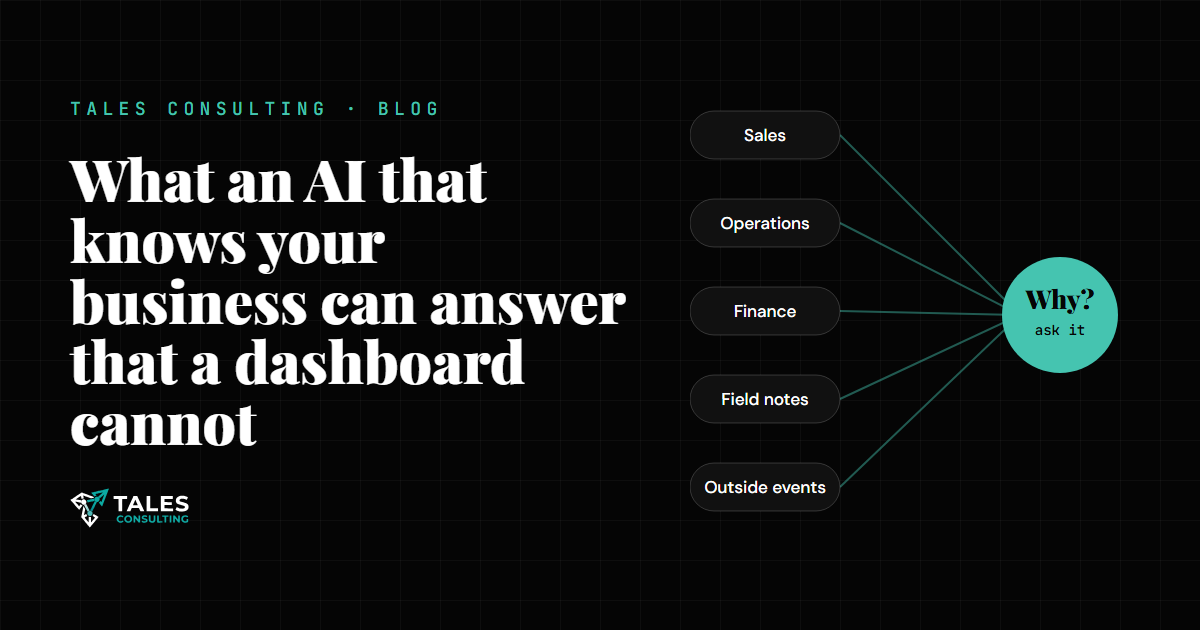
Each of these needs someone to connect records that live in different places. Orders sit in one system, payments in another, visit notes on reps' phones, and the reason a distributor slowed down may be a fuel price rise that appears in none of them. A good analyst can answer one of these questions given a week. Few companies have the time to ask them every month.
How an AI answers them
The AI we build for a company reads its records together: sales, operations, finance and the notes its people write in the course of their work. It also reads public context such as prices, policy changes and events, and it keeps all of this over time, so it can say things like "deliveries to this distributor dropped from twice a week to once in the six weeks since the fuel price rise".
You ask it questions in plain English, the way you would ask a person on WhatsApp, and it answers with names and figures. When it suggests a change, you can try it with your team and ask a few weeks later what came of it, because the before and after are already in the record.
A few things matter more than the model itself:
- Your data stays yours. The AI runs in your own cloud, and nothing is used to train anyone else's system.
- It has to read the right records. If the work is not recorded, no AI can reason about it. Often the first step is capturing what happens in the field or on the shop floor as it happens.
- Answers should show their working. A useful answer says which records it came from, so you can check it before acting on it.
Where to start
You do not need a large data project to begin. Pick the three questions you most want answered about your business this month and send them to us. For each one, we will tell you which records would have to be read to answer it, which of those you already have, and what the first version would cost.